The Hidden Cost of False Positives: Designing Alert Systems That Actually Help
Alert fatigue is burning out engineering teams. Learn strategies to reduce noise and build alerting systems that engineers actually trust.
The Hidden Cost of False Positives: Designing Alert Systems That Actually Help
Published: February 2026 | Reading Time: 9 minutes
At 3 AM, your phone buzzes. You wake up, heart racing, only to discover it's another false alarm. The third one this week. You silence the notification and try to fall back asleep, but now you're worrying about the next alert—and whether you'll trust it enough to respond quickly when something is actually wrong.
This is alert fatigue, and it's silently destroying engineering teams.
The Scope of the Problem
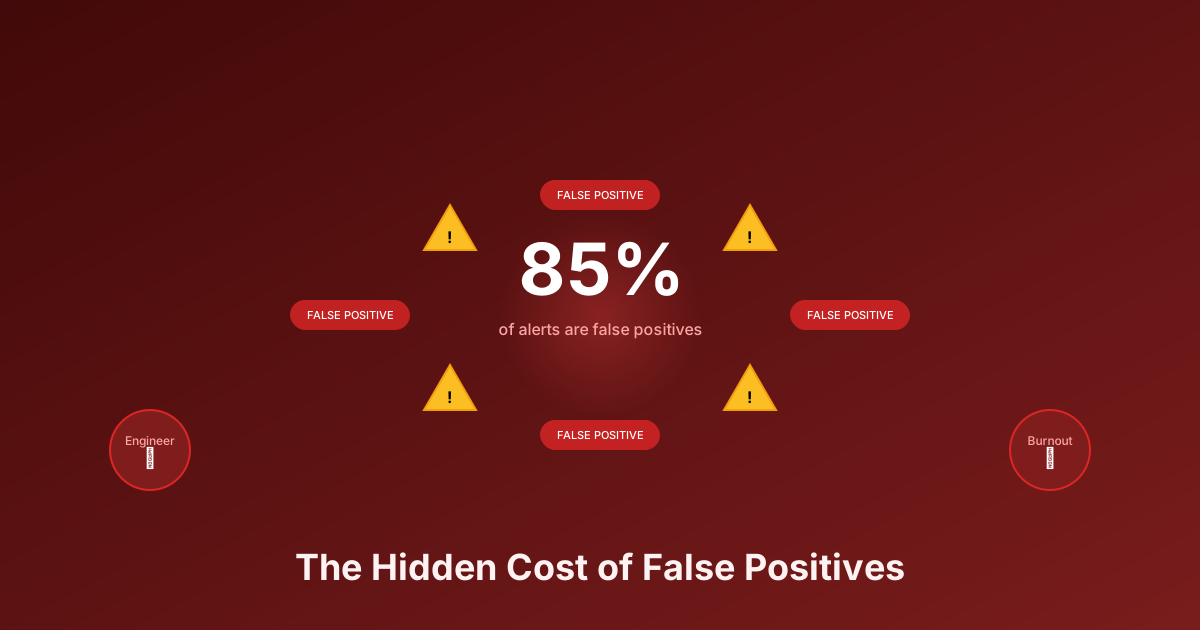
The statistics paint a troubling picture. Studies consistently find that around 85% of alerts are false positives or duplicates that don't require action. About 40% of on-call engineers report burnout symptoms. Teams with high alert volumes experience significantly higher attrition rates.
Despite substantial investments in monitoring tools, operational burden has actually increased for many organizations. More alerts don't mean better monitoring—often, they mean worse.
The most insidious aspect is how alert fatigue compounds. A noisy alerting system trains engineers to dismiss notifications. Response times slow. Eventually, a critical alert arrives and receives the same dismissive treatment as the dozen false alarms before it. The monitoring system worked; the alert fired. But the human response failed because trust in the system had eroded.
The Psychology of Alert Fatigue
Every alert requires a sequence of micro-decisions. Is this real? Is it urgent? Do I need to involve others? What's the right first step? Is this getting worse?
On a quiet shift, an engineer might make a handful of these decisions. On a noisy shift? Thirty to fifty, each one depleting cognitive reserves.
This isn't just about annoyance—it's about capacity. Decision fatigue is real and measurable. As cognitive resources deplete, decision quality degrades. Engineers on alert-fatigued teams make more mistakes, take longer to diagnose issues, and are more likely to miss subtle warning signs.
The learned helplessness effect makes things worse. When engineers repeatedly receive alerts they can't act on—because the issue resolved itself, or because it requires information they don't have, or because it's not actually a problem—they learn that responding to alerts doesn't produce useful outcomes. This conditioning transfers to all alerts, including the important ones.
The Financial Reality
The costs of alert fatigue extend far beyond exhausted engineers.
High-impact outages cost organizations substantial money per hour of downtime. Developer time spent on alert noise—triaging, investigating, dismissing—represents salary spent on work that produces no value. Nearly a third of burned-out engineers are actively job-hunting, and replacement costs for senior engineers are significant.
But the hardest cost to measure is opportunity cost. Engineers sorting through alert noise aren't building features, fixing technical debt, or improving systems. The best engineers—the ones who could reduce alert noise if given time—are instead consumed by the noise itself. It's a trap that feeds itself.
Why False Positives Persist
Several patterns consistently generate alert noise.
Static thresholds that don't reflect reality. A CPU threshold of 80% might fire constantly during normal batch processing while missing actual problems during off-peak hours. Thresholds set without understanding normal system behavior generate alerts that aren't meaningful.
Duplicate alerts from multiple systems. The infrastructure team monitors with one tool, the application team with another, and the security team with a third. The same underlying issue triggers alerts in all three, multiplying noise without adding information.
Alerts without clear severity. When every alert has the same priority, nothing is urgent. Engineers must investigate each one to determine importance, consuming time even for trivial issues.
Flapping conditions. A metric crosses a threshold, fires an alert, drops back below, clears, crosses again, fires again. The underlying issue might be minor—normal variance, a brief spike—but it generates continuous notifications.
Missing context. An alert says "high latency on service-X" but doesn't explain whether users are affected, what changed recently, or what action to take. The engineer must gather this context manually, adding investigation time to every alert.
Strategies That Actually Reduce Noise
Solving alert fatigue requires attacking the problem from multiple angles.
Dynamic Thresholds
Replace static thresholds with baselines that adapt to your system's actual behavior. Rather than alerting when CPU exceeds 80%, alert when CPU exceeds two standard deviations above normal for this time of day and day of week.
This requires investment in baseline establishment—collecting data over weeks or months to understand normal patterns—and in tooling that can evaluate current metrics against those baselines. But the payoff is substantial: alerts that fire when behavior is genuinely unusual rather than when metrics cross arbitrary lines.
Time-window averaging prevents flapping. Instead of alerting on instantaneous values, alert when a condition persists for five minutes. Brief spikes resolve themselves; sustained issues trigger investigation.
Severity That Means Something
Establish clear definitions for severity levels and enforce them consistently.
Critical alerts indicate complete service outage or data loss risk—things that justify waking someone at 3 AM. They require immediate response, within minutes.
High alerts indicate major degradation affecting many users. They need attention within the hour but may not require midnight response.
Medium alerts indicate partial issues that can wait for business hours. They create tickets rather than pages.
Low alerts are informational—things to review during regular operations but not to interrupt work.
The discipline is assigning severity based on actual impact, not on how scary the metric sounds. High CPU with no user impact is low severity. Elevated error rate affecting checkout is critical. The metric isn't the severity; the impact is.
Alert Correlation and Grouping
When a database slows down, every service that calls it starts failing. Without correlation, you get dozens of alerts for what is actually one problem.
Grouping related alerts reduces noise dramatically. Alerts from the same time window, the same service cluster, the same dependency chain should be presented as a single incident rather than independent problems.
This grouping can be rule-based—all alerts mentioning database-primary within five minutes become one incident—or pattern-based, using historical data to identify alerts that typically fire together.
Contextual Enrichment
Every alert should answer basic questions without requiring investigation.
What happened? The specific condition that triggered the alert, with current values and thresholds.
Where did it happen? The affected service, host, region, and customer segment.
What's the impact? Whether users are affected and how many. Whether revenue is at risk.
What should I do? Links to relevant runbooks, dashboards, and recent changes that might explain the issue.
This context transforms alerting from "investigate to understand" to "read and respond." The difference in response time and cognitive load is substantial.
Building Sustainable On-Call Culture
Alert design is only part of the solution. The structure surrounding on-call work matters equally.
Shift design should prevent burnout. Maximum eight-hour shifts when possible. At least sixteen hours between shifts. Mandatory time off after intensive on-call periods. Compensation for overnight incidents—whether time off, schedule flexibility, or financial recognition.
Every alert should meet basic quality standards. It must be actionable—someone can do something about it. It must require human intervention—if automation could handle it, why is a human involved? It must have a defined severity that matches actual impact. It must include enough context to understand and respond.
Regular alert review catches drift before it becomes crisis. Monthly analysis of alert volume, false positive rates, and response patterns reveals which alerts are generating noise and which are providing value. Alerts with high false positive rates should be fixed or eliminated.
Measuring Alert Quality
You can't improve what you don't measure. Track these metrics over time.
Signal-to-noise ratio shows how many alerts actually required action versus how many were noise. Target 70% or higher actionable alerts.
False positive rate indicates how often alerts fire without underlying issues. Below 15% is acceptable; above 30% is critical.
Alert volume per engineer indicates workload. Fewer than 20 alerts per week per engineer is sustainable; more than that leads to fatigue.
Response time shows whether engineers trust the alerting system. Slowing response times often indicate growing skepticism about alert validity.
The Path Forward
Alert fatigue isn't inevitable. It's the result of alerting systems built without considering human factors, accumulated configuration that nobody reviews, and organizational inertia that tolerates noise because fixing it seems hard.
The fix requires discipline in alert design, investment in tooling that enables dynamic thresholds and correlation, and cultural commitment to treating alert quality as a priority rather than an afterthought.
Start with an audit of your noisiest alerts. Identify the top ten generators of false positives and address them specifically. Measure the impact. Repeat.
The payoff is engineering teams that trust their alerting systems, respond quickly to real issues, and aren't ground down by constant noise. That's worth the investment.
Ready to reduce alert fatigue? Monitrics helps you build workflow-based monitoring that focuses on user impact rather than infrastructure noise. Learn more at Monitrics.
Related Articles
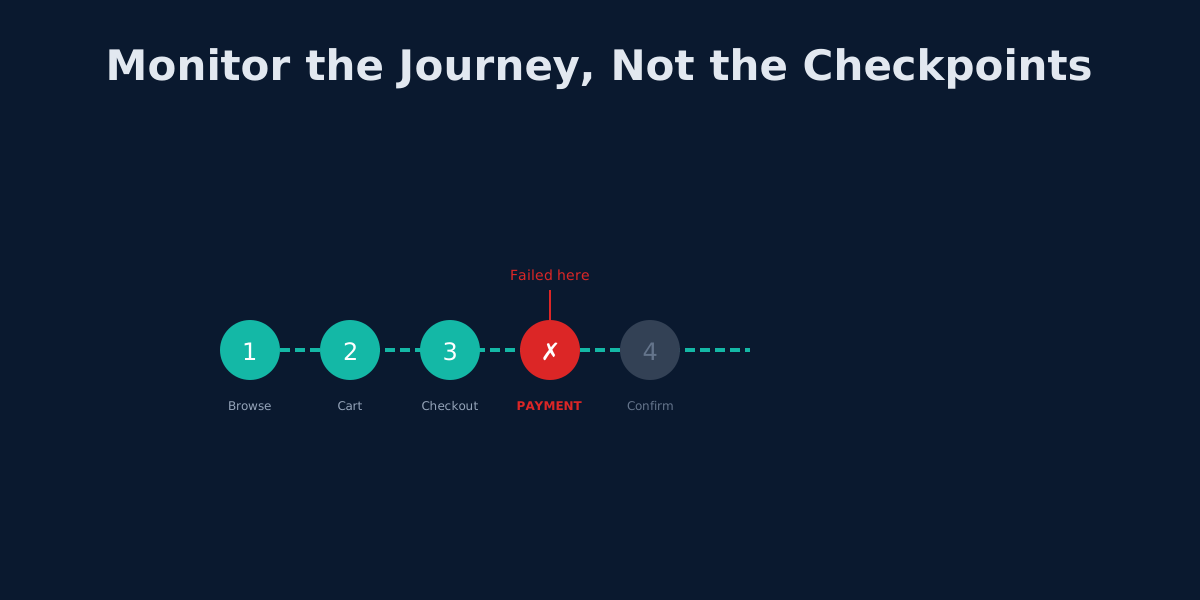
Beyond UptimeRobot: Monitoring Complete User Journeys, Not Just Endpoints
Your API returns 200 OK but users can't check out. Learn why endpoint monitoring creates blind spots and how workflow monitoring fixes them.
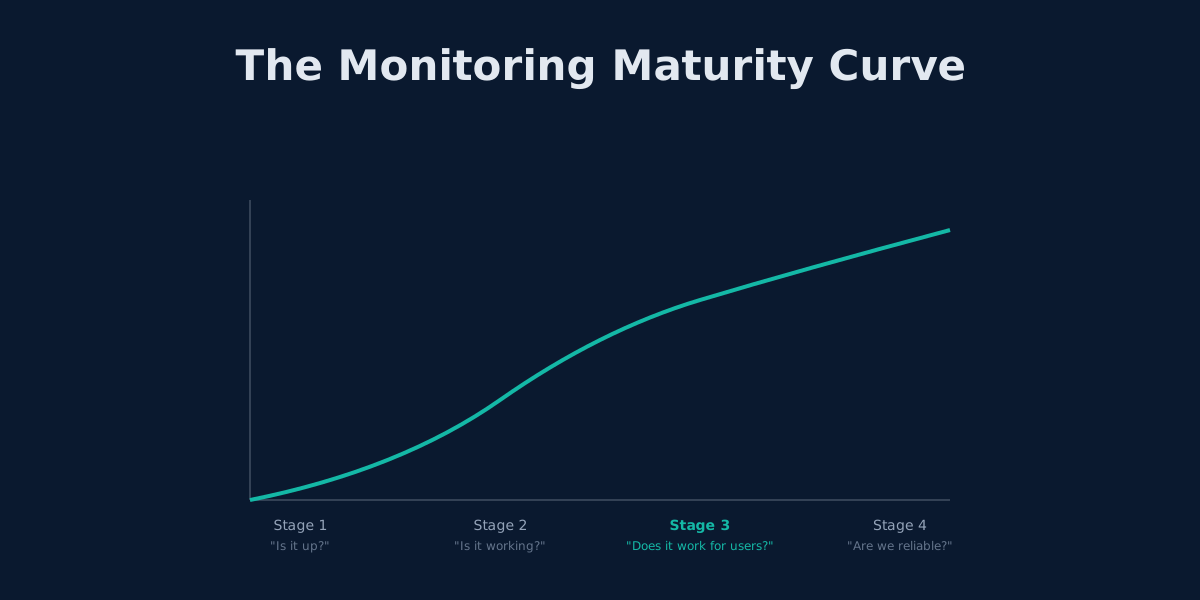
Outgrowing UptimeRobot: When Simple Monitoring Isn't Enough
UptimeRobot works for basic uptime checks. Here's how to tell when you've outgrown it and what comes next.
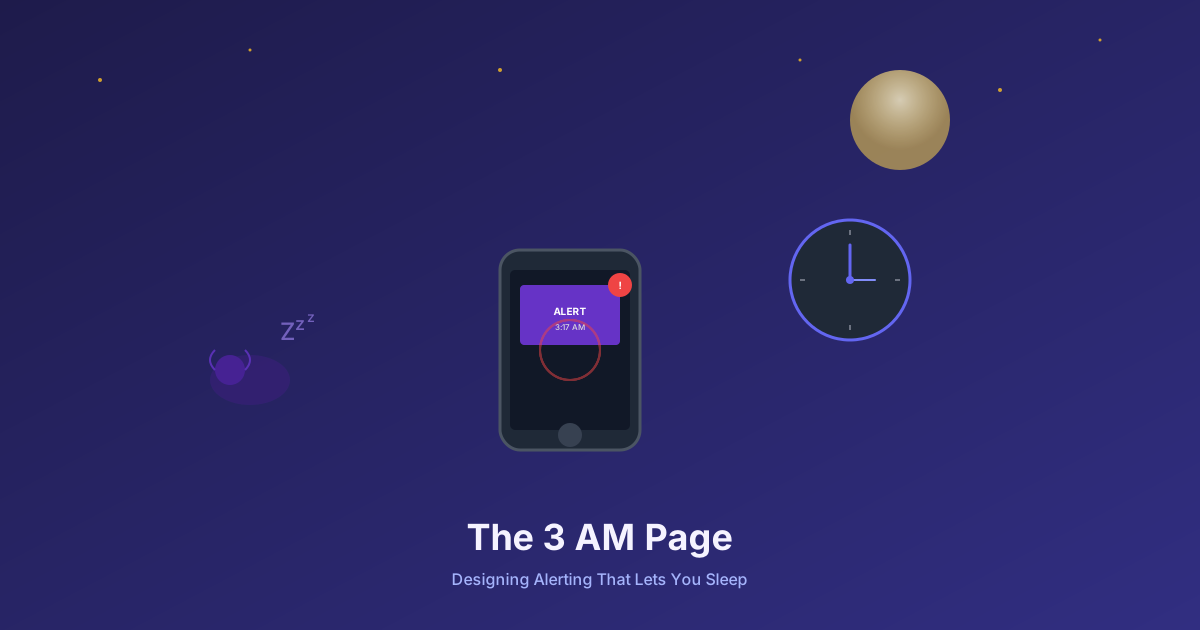
The 3 AM Page: How to Design Alerting That Lets You Sleep
Alert fatigue is burning out engineering teams. Learn to design wake-up-worthy alerts, implement SLO-based monitoring, and build on-call rotations that don't destroy sleep.