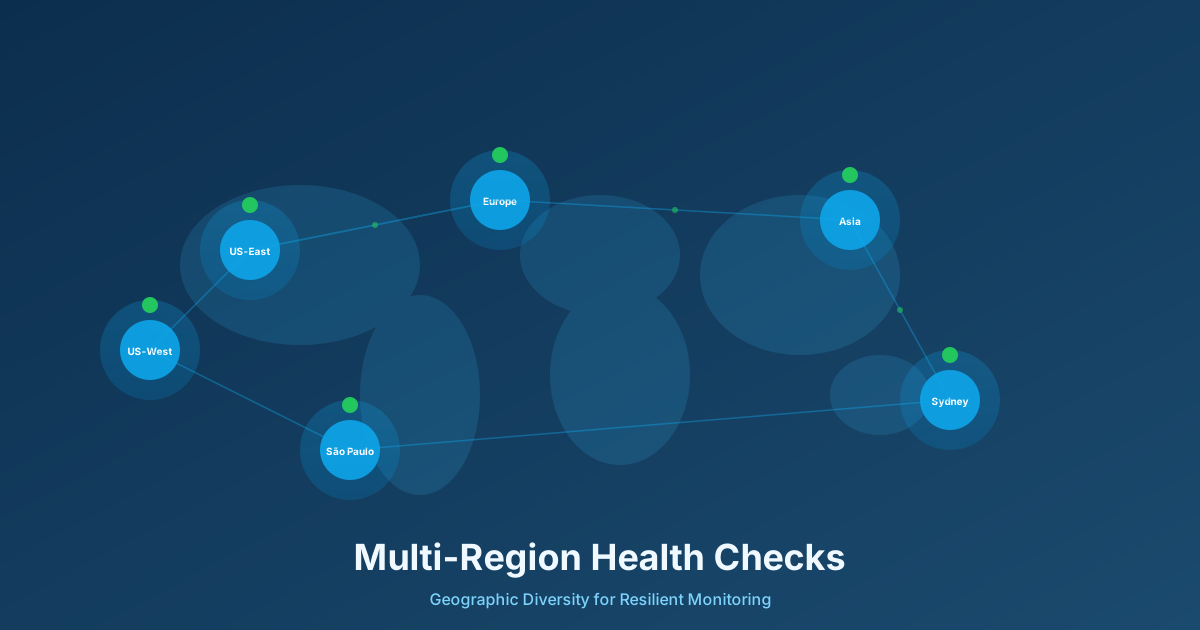
Multi-Region Health Checks: Why Your Uptime Monitoring Needs Geographic Diversity
Single-region monitoring creates blind spots that can leave your users affected by outages while your dashboards show green. Learn why geographic diversity is critical for modern distributed systems.
Multi-Region Health Checks: Why Your Uptime Monitoring Needs Geographic Diversity
Published: February 2026 | Reading Time: 10 minutes
Your monitoring dashboard shows all green. Everything looks healthy. Meanwhile, your users in another region can't reach your service at all. This isn't hypothetical—it's what happened to countless organizations during recent major cloud outages when single-region monitoring failed to detect problems that affected millions of users.
The fundamental issue is perspective. If your monitoring runs from the same infrastructure it's supposed to be monitoring, it shares the same failure modes. When that infrastructure fails, your monitoring fails with it—and reports nothing wrong.
The Blind Spot Problem
Single-region health checks create a dangerous assumption: that if your monitoring can reach your service, everyone can reach your service. This assumption is false in ways that matter.
Consider what happens during a regional outage. Your monitoring runs in US-EAST-1. Your service runs in US-EAST-1. DNS resolution happens through US-EAST-1 infrastructure. When that region has problems, your monitoring might fail to detect the issue because:
The monitoring infrastructure itself is impaired. CloudWatch metrics, internal health check endpoints, and logging services are all affected by the same outage. Your monitoring system can't report what it can't observe.
DNS resolution fails within the region. Your health checks can't resolve your own endpoints, but from the monitoring system's perspective, this might look like a timeout rather than a catastrophic failure—or might not register at all if the monitoring system is also struggling with DNS.
Cached responses mask the problem. Health endpoints might return cached 200 OK responses even when the underlying business logic is completely broken. A simple ping check sees success while users see failures.
External monitoring from unaffected regions would have detected these issues immediately. The perspective from outside the failure zone reveals problems invisible from within.
Why Geography Matters for Network Performance
Network latency varies dramatically with distance. This isn't a flaw to be engineered around—it's physics. Light travels through fiber at about 200,000 kilometers per second. A round trip from New York to Singapore covers roughly 30,000 kilometers, imposing a minimum latency around 150 milliseconds before any processing occurs.
This has practical implications for monitoring configuration.
Timeout thresholds must account for geographic distance. A health check with a 5-second timeout works fine for local targets. The same check targeting a server across an ocean might timeout during normal operation, generating false positives that obscure real issues.
Baseline expectations differ by region pair. What's normal latency for US-East to US-West is different from US-East to Europe, which is different from US-East to Asia-Pacific. Static global thresholds applied everywhere will be too tight for distant regions and too loose for nearby ones.
Jitter increases with distance. The variability in latency—not just the average—grows as network paths traverse more hops across more networks. Monitoring thresholds need to accommodate this variability rather than alerting on every normal fluctuation.
CDN Complexity: The Intermediate Layer
Modern web architecture typically includes content delivery networks between users and origin servers. With over 70% of internet traffic now flowing through CDNs, monitoring must account for this intermediate layer.
CDN monitoring has unique challenges that single-region health checks miss.
Edge node health varies by location. Your CDN might have healthy edge nodes in North America and degraded nodes in Asia. Global monitoring averages would look acceptable while Asian users suffer. Regional monitoring reveals the discrepancy.
Cache behavior can mask origin failures. A health check that hits a cached response returns quickly with a 200 status—even if the origin server is completely down. By the time cache expires and the problem becomes visible, significant time has passed.
Multi-CDN architectures require multi-perspective monitoring. Organizations using multiple CDN providers need monitoring that reflects how each provider performs from each geographic location. Traffic routing decisions depend on this visibility.
Building Effective Geographic Coverage
Implementing multi-region monitoring requires thoughtful probe placement and configuration.
Probe diversity should reflect user distribution. If your users are concentrated in North America and Europe, your monitoring should emphasize those regions. If you serve a global audience, you need probes on every major continent. Match monitoring investment to business reality.
Multiple probes per region provide redundancy and consensus. A single probe failing might indicate a probe problem rather than a service problem. Multiple probes agreeing on failure provides confidence that the issue is real. Consensus-based alerting—requiring agreement from multiple probes—reduces false positives from transient issues.
Different network types reveal different problems. A probe running on a cloud provider's network might have different connectivity to your services than a probe on a residential ISP. For comprehensive coverage, include probes across network types that match how your actual users connect.
Layered Health Check Strategy
Effective monitoring examines your service at multiple layers, each revealing different failure modes.
Infrastructure layer checks validate basic network reachability. TCP connection tests verify that ports are open and accepting connections. ICMP ping verifies that hosts respond at the network level. These checks catch catastrophic failures—servers down, networks unreachable—but tell you nothing about application health.
Application layer checks validate that your service works. HTTP checks verify that your endpoints respond with expected status codes. API checks validate that business logic executes correctly. These catch application failures that infrastructure checks would miss—a web server running but returning errors.
Business logic checks validate end-to-end functionality. Synthetic transactions that simulate user workflows—login, search, checkout—verify that the complete user experience works. These catch subtle issues that simpler checks miss: a service that responds to health endpoints but fails on actual operations.
External dependency checks monitor services you depend on. Third-party APIs, CDN edge availability, DNS resolution from global resolvers—failures in these dependencies affect your users even when your own systems are healthy.
Consensus-Based Alerting
Single-probe failure shouldn't trigger alerts. Network paths fail transiently. Probes have their own reliability characteristics. A brief hiccup at one location doesn't indicate a widespread problem.
Consensus requirements provide confidence. Alert only when multiple probes from different regions agree that something is wrong. This approach filters transient issues while ensuring real problems are detected.
Weight probes by importance. If 80% of your users are in North America, failures detected by North American probes matter more than failures detected elsewhere. Weighted consensus ensures alerting reflects business impact.
Require persistence across time. A failure detected by multiple probes but resolving within one check interval might not warrant alerting. Requiring failures to persist across multiple check intervals filters self-resolving issues while ensuring sustained problems get attention.
Synthetic Transaction Monitoring
Beyond simple endpoint checks, synthetic monitoring simulates actual user journeys from multiple geographic locations.
A synthetic transaction for an e-commerce site might load the homepage, search for a product, add an item to cart, and proceed through checkout. Each step is timed and validated. Failure at any step reveals the specific point where user experience breaks down.
Running this transaction from multiple global locations reveals geographic variations in performance and availability. Users in Europe might experience checkout timeouts while users in North America proceed normally. Single-region monitoring would miss this entirely.
Synthetic transactions catch issues that simple health checks miss. An API might respond correctly to direct health check requests while failing under the specific sequence of operations that real users perform. The synthetic transaction, mimicking real user behavior, surfaces these problems.
DNS: The Often-Overlooked Dependency
DNS resolution is the first step in every network request, and DNS failures manifest as every other kind of failure. Slow DNS makes applications slow. Failed DNS makes applications unreachable.
Multi-region DNS monitoring verifies resolution from global locations. Your DNS might work perfectly from your office while failing for users in Asia due to regional resolver issues or propagation delays.
After DNS changes, global monitoring verifies propagation. TTL values determine how long old records persist in caches worldwide. Monitoring from multiple locations shows whether new records have propagated or whether users in certain regions are still hitting old configurations.
DNS performance varies by location. Resolution times from different global resolvers reveal inconsistencies in DNS infrastructure performance that affect user experience geographically.
The ROI Calculation
Multi-region monitoring costs more than single-region monitoring—more probes, more infrastructure, more complexity. Is it worth it?
Consider the cost of outages that single-region monitoring would miss. If a regional issue affects users for an hour before detection, that's an hour of degraded experience, lost revenue, and reputation damage. Multi-region monitoring detects such issues in minutes.
Consider the value of accurate performance data. Geographic performance variations inform infrastructure investment decisions. Without multi-region monitoring, you're guessing about regional user experience.
Consider the confidence in deployment decisions. Knowing that your service performs well from multiple global perspectives provides assurance that single-region data cannot.
For most organizations serving geographically distributed users, multi-region monitoring is not a premium feature but a baseline requirement.
Implementation Roadmap
If you're starting from single-region monitoring, a phased approach makes sense.
First, audit your current monitoring to understand its geographic limitations. Where do your probes run? What perspective do they provide? What would they miss during a regional outage?
Second, add probes in regions where your users are concentrated. If you serve primarily US and European users, add probes in those regions first. Expand to other regions as needed.
Third, configure region-aware thresholds. Adjust timeout and latency thresholds based on expected geographic latency. A check from Europe to US-East should have different expectations than a check within US-East.
Fourth, implement consensus-based alerting. Require multiple probes to agree before triggering alerts. Weight probe importance by user distribution.
Fifth, add synthetic transactions that mimic user workflows. Run these from multiple regions to reveal geographic variations in end-to-end user experience.
The Perspective Matters
Your monitoring is only as good as the perspective it monitors from. A single vantage point sees only what's visible from that location. Geographic diversity provides the comprehensive view needed to understand how your service performs for users everywhere.
The question isn't whether regional issues will affect your users—they will. The question is whether your monitoring will detect them before those users do.
Ready for multi-region monitoring? Monitrics runs health checks from multiple geographic locations, providing the diverse perspective you need to catch issues wherever they occur. Get started at Monitrics.
Related Articles
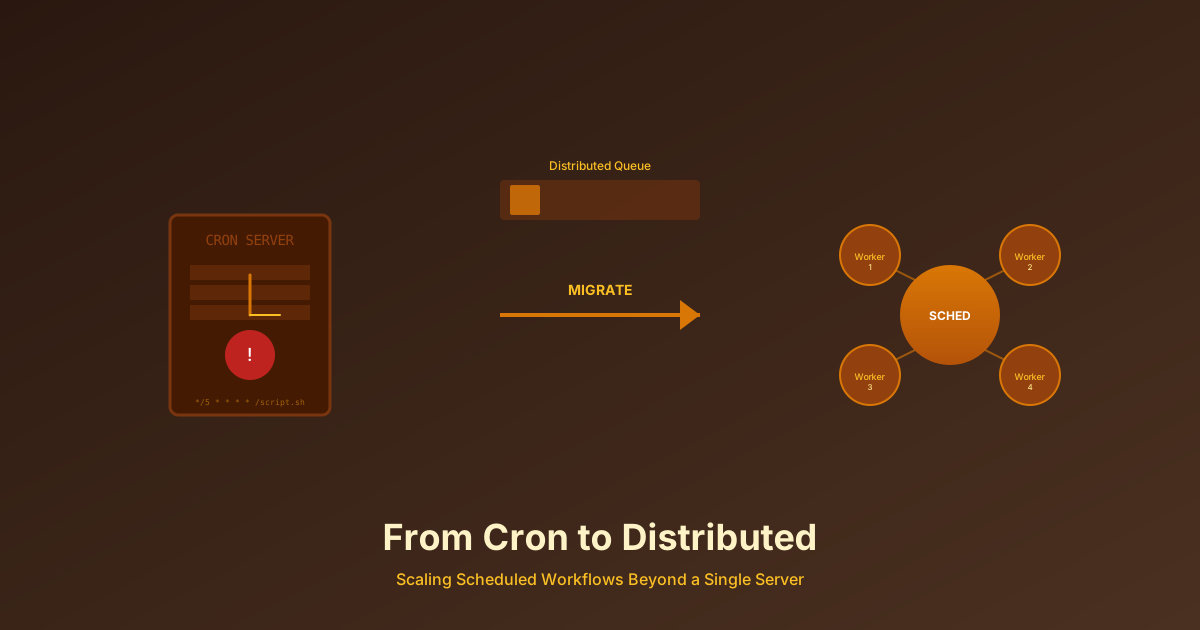
From Cron to Distributed: Scaling Scheduled Workflows Beyond a Single Server
Cron jobs don't scale. Learn when and how to migrate from traditional cron to distributed workflow schedulers, and why the transition matters for growing teams.
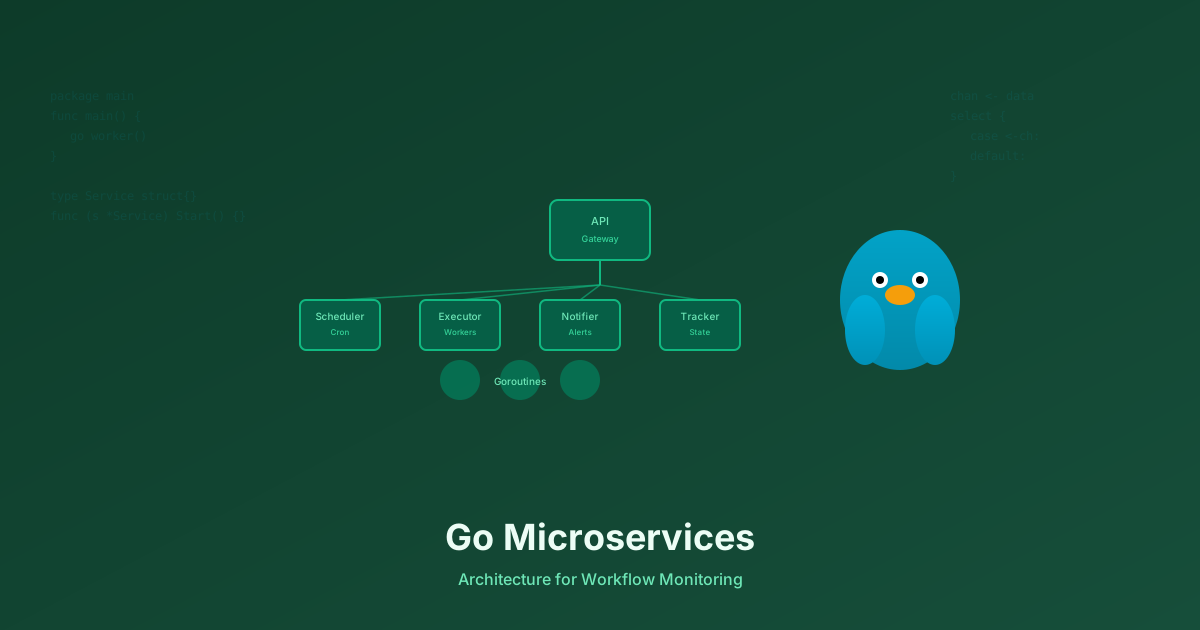
Why We Chose Go Microservices Over a Monolith for Workflow Monitoring
Go's concurrency model, single binary deployment, and fast compilation make it ideal for distributed systems. Learn why we built Monitrics with Go microservices instead of a monolith.
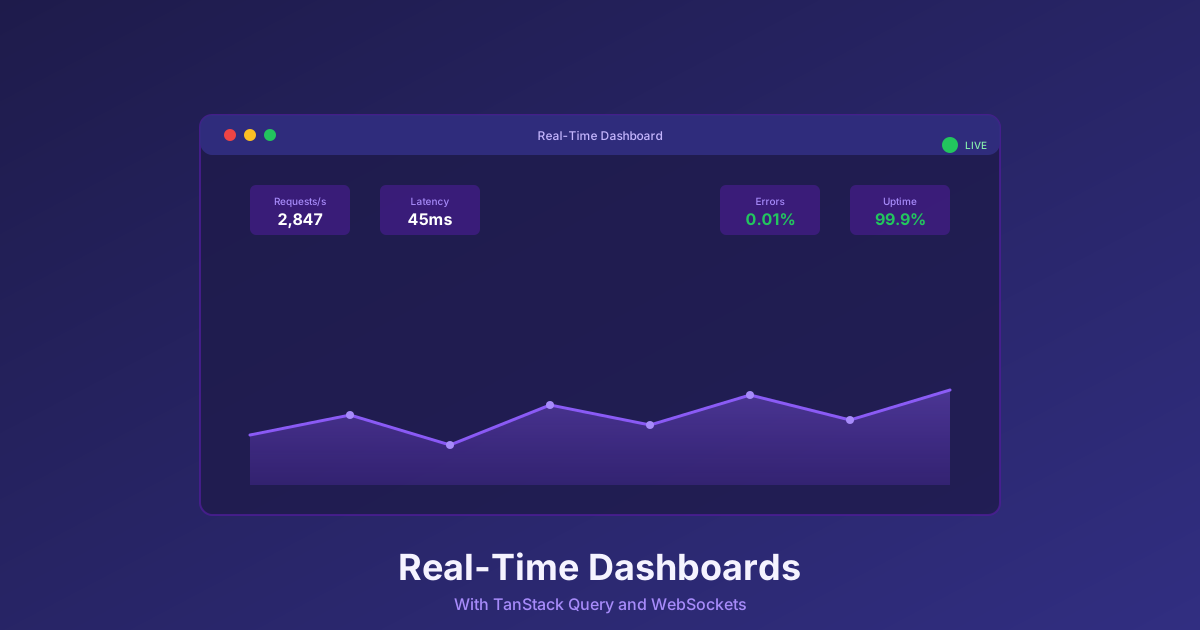
Building Real-Time Dashboards with TanStack Query and WebSockets
Learn production-ready patterns for building real-time monitoring dashboards using TanStack Query, WebSockets, and React. Performance optimization, connection resilience, and state management strategies.